CPA Waco AlternativeTwo published weekly averages
One payroll number for the whole county hides the gap. This page puts the two public averages back in separate columns for an owner in Waco.
Compare the two lines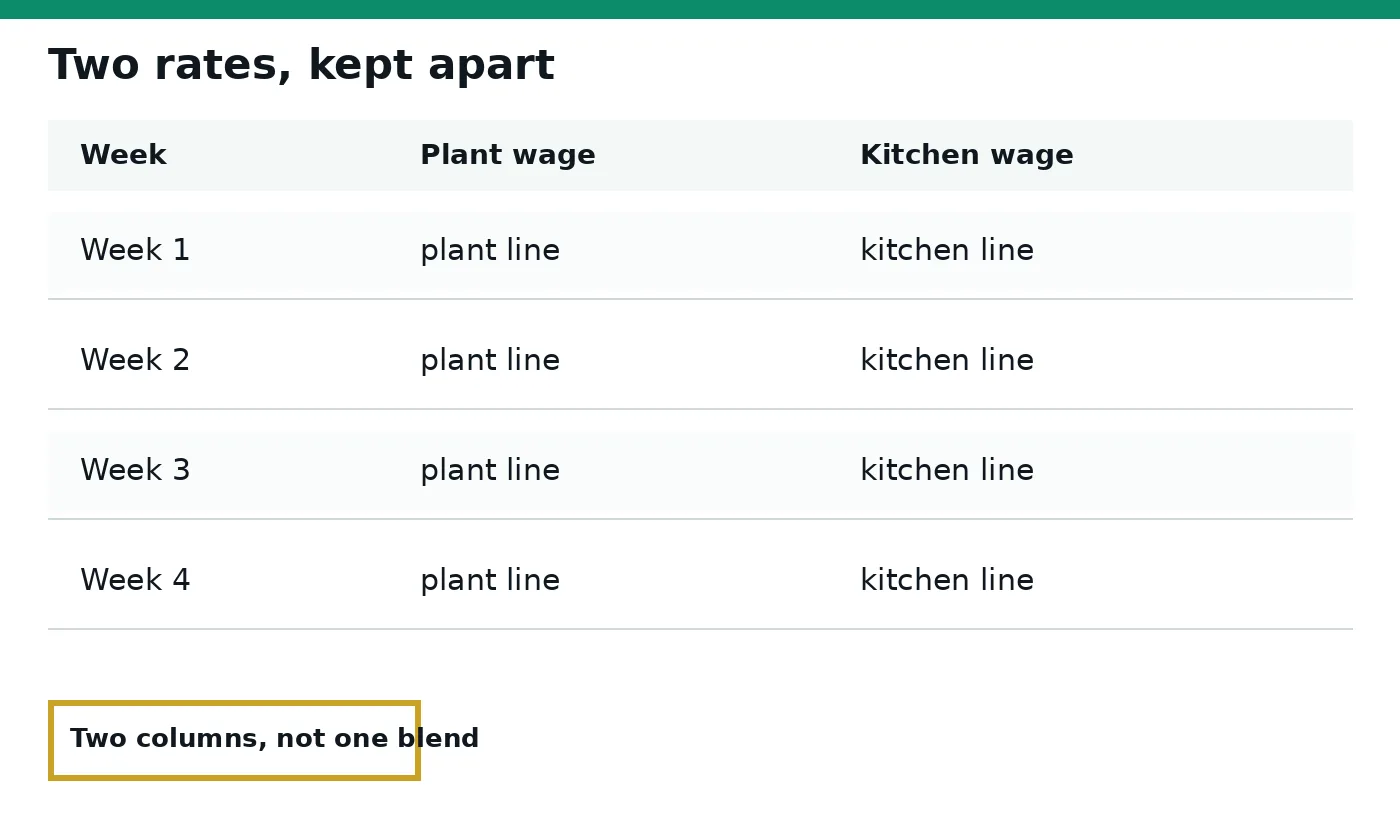
One payroll number for the whole county hides the gap. This page puts the two public averages back in separate columns for an owner in Waco.
Compare the two linesThe county's published figures put manufacturing weekly pay and food service weekly pay in different worlds. One was written near fifteen thirteen dollars. The other was written near four thirty two dollars. Those are public averages for a year, not your crew's paycheck, and they are not a quote.
Manufacturing in this county was published near fifteen thirteen dollars a week, and food service near four thirty two. A counter and a plant should stay costed on the week each one actually pays.
We use the gap only as a warning. If your file has one wage line for both kinds of work, the line is already lying, even before we see a single timecard. The fix is to split the line, not to argue about the county average.
A bid priced on the lower week and staffed on the higher week loses money in a way the invoice never explains. The customer was quoted the kitchen. The crew was paid the plant. The close is where that gap becomes visible, if anyone is willing to leave the two rates named.
Owner pay sits beside those rates, not inside them. What you take out of the company is a decision. What the crew was hired at is a fact. Mixing the two makes both of them harder to defend later.
When profit is high and wages are thin, the wage limit on the pass through deduction can bite. We look at that before the year closes, while you can still decide what a reasonable wage is. We do not invent a figure for you on a web page. We look at the year you actually had.
We do not print your rates here. We do not print a fee. The public averages exist so a reader in town recognizes the gap. Your file is the only average that matters after that, and it lives in the books, not on this page.
A lender who asks for one blended labor number can still receive statements. The statements should show the split in the notes you are willing to stand behind. A signature we do not give is a different letter, and it goes elsewhere.
A quote written on one blended labor line gets copied into the next quote, because that is how a busy week gets saved. The second quote looks consistent. It is consistent with a number that was never true. We would rather the quote look a little uneven and match the crew you actually pay.
A job that used the plant crew and a job that used the kitchen crew should not be asked to prove the same margin. When they share a labor line, the calm job hides the one that lost money. Splitting the line is how you see which Saturday to stop repeating, and which one was fine all along.
A Saturday that needs a plant wage to set up and a kitchen wage to serve should keep both rates when one card batch lands. We read that Saturday on the video call the same way the owner sees it in the deposit. The next quote starts from the two rates. One blended labor line is how the second quote inherits the first mistake.
Leave the timecards for later. The plant rate and the kitchen rate are enough to begin.

You will be talking to the Steven Palmieri practice.